Introduction
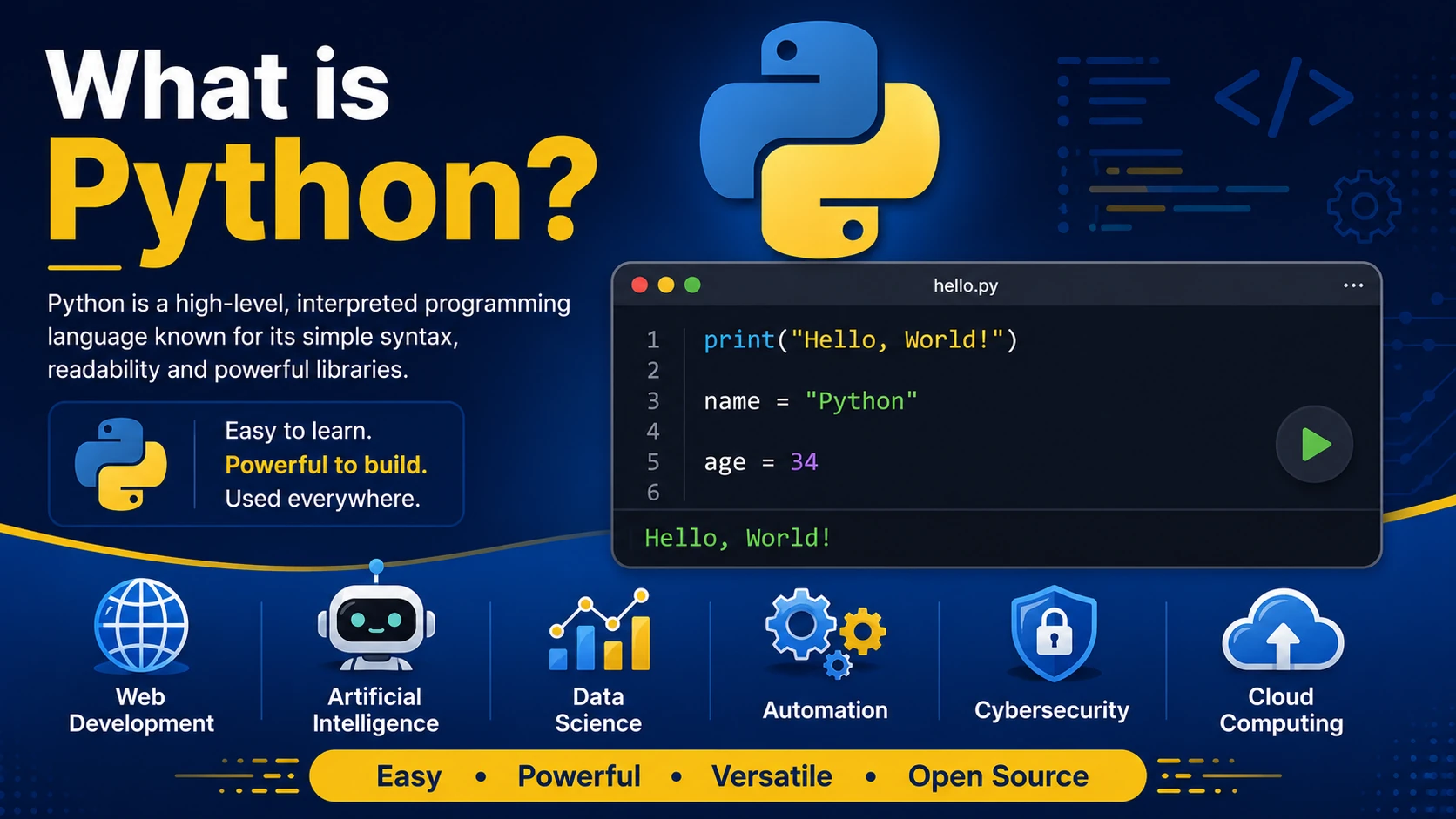
Python is a high-level, interpreted programming language that is known for its simple syntax and readability. It allows developers to write clear and concise code, making it an excellent language for beginners while remaining powerful enough for professional software development.
Since its creation, Python has become one of the most widely used programming languages in the world. It powers websites, desktop applications, scientific research, artificial intelligence, automation tools, cybersecurity applications and much more.
History of Python
Python was created by Guido van Rossum and first released in 1991. His goal was to create a language that was easy to read, easy to learn and enjoyable to use.
Today, Python continues to evolve through contributions from thousands of developers around the world.
Why is Python Popular?
- Simple and readable syntax.
- Easy for beginners.
- Cross-platform support.
- Large standard library.
- Huge developer community.
- Open source.
- Excellent documentation.
What Can Python Do?
Python is used in many different fields.
- 🌐 Web Development
- 🤖 Artificial Intelligence
- 📊 Data Science
- 🔒 Cybersecurity
- ⚙ Automation
- 📱 Desktop Applications
- ☁ Cloud Computing
- 🎮 Game Development
Your First Python Program
print("Hello, World!")
When you run this program, Python displays:
Hello, World!
Is Python Compiled or Interpreted?
Python is generally described as an interpreted language. Instead of compiling your entire program into machine code before execution, Python executes your code through the Python interpreter. This allows you to develop and test programs quickly.
Advantages of Python
- Easy to learn.
- Rapid development.
- Large collection of libraries.
- Portable across operating systems.
- Ideal for beginners and professionals.
Summary
Python is one of the most versatile programming languages available today. Whether you want to build websites, automate tasks, analyze data or create AI applications, Python provides an excellent starting point for your programming journey.
Examples
The following examples help reinforce the concepts explained in this lesson.
<!DOCTYPE html>
<html>

<head>

<title>My First Page</title>

</head>

<body>

<h1>Hello World</h1>

</body>

</html>
💡 Pro Tip
Practice every concept immediately after reading it. Learning by doing is the fastest way to master HTML.
⚠ Common Mistake
Do not simply copy code examples. Type them yourself and experiment with small changes.
Best Practices
- Write clean and readable HTML.
- Indent your code consistently.
- Use semantic HTML elements.
- Validate your HTML regularly.
- Test your pages in multiple browsers.
Frequently Asked Questions
Why should I learn HTML first?
HTML is the foundation of every website. Once you understand HTML, learning CSS and JavaScript becomes much easier.
Is HTML difficult?
No. HTML is considered one of the easiest web technologies to learn, making it an excellent starting point for beginners.