
Introduction
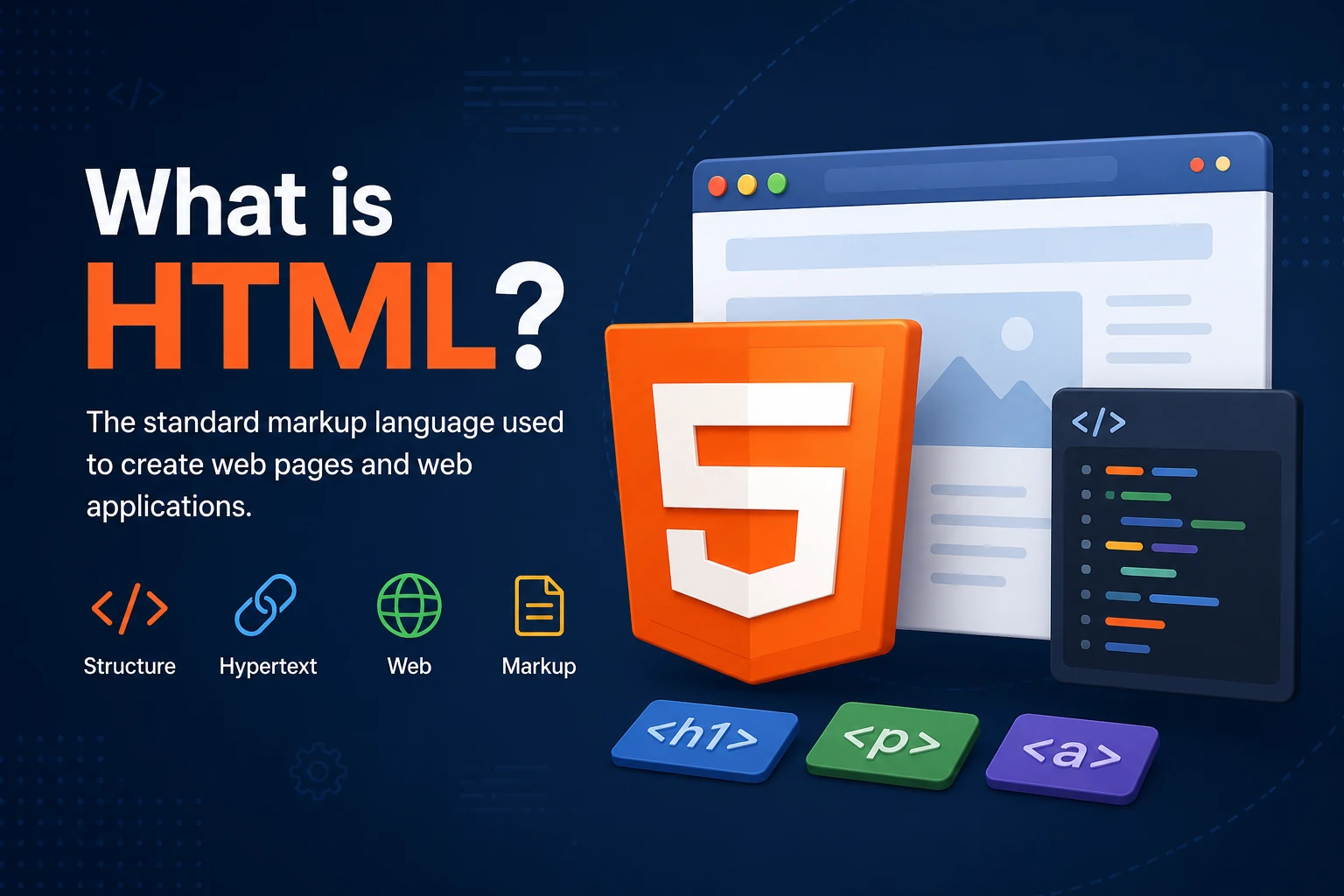
HTML stands for HyperText Markup Language. It is the standard markup language used to create web pages and web applications. Every website you visit uses HTML to organize and display content such as text, images, videos, tables, forms and links.
Think of HTML as the skeleton of a website. It provides the structure, while CSS controls the appearance and JavaScript adds interactivity.
Why is HTML Important?
Without HTML there would be no web pages. Browsers such as Chrome, Firefox, Edge and Safari read HTML documents and display them as websites.
- Builds the structure of web pages.
- Works together with CSS and JavaScript.
- Supports multimedia, forms and navigation.
- Improves accessibility and SEO.
- Forms the foundation of modern web development.
Examples
The following examples help reinforce the concepts explained in this lesson.
<!DOCTYPE html>
<html>

<head>

<title>My First Page</title>

</head>

<body>

<h1>Hello World</h1>

</body>

</html>
💡 Pro Tip
Practice every concept immediately after reading it. Learning by doing is the fastest way to master HTML.
⚠ Common Mistake
Do not simply copy code examples. Type them yourself and experiment with small changes.
Best Practices
- Write clean and readable HTML.
- Indent your code consistently.
- Use semantic HTML elements.
- Validate your HTML regularly.
- Test your pages in multiple browsers.
Frequently Asked Questions
Why should I learn HTML first?
HTML is the foundation of every website. Once you understand HTML, learning CSS and JavaScript becomes much easier.
Is HTML difficult?
No. HTML is considered one of the easiest web technologies to learn, making it an excellent starting point for beginners.